Smarter, Safer Elevator Evacuation
OCCUPANT EVACUATION OPERATION (OEO)
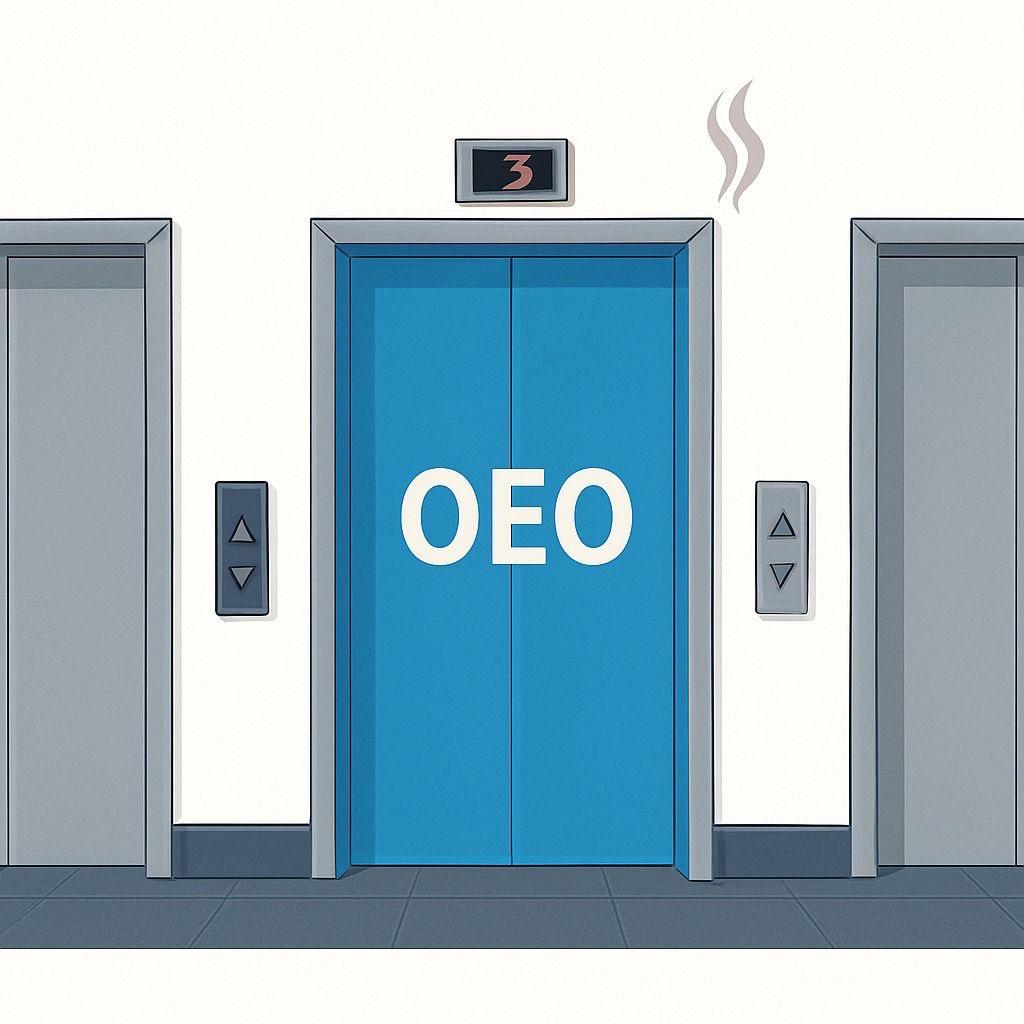
Occupant Evacuation Operation keeps designated elevators in service during a fire event, enabling faster, safer movement of building occupants. Instead of shutting elevators down, OEO works with the building’s Fire Alarm System (FAS) to determine when and how selected elevators continue operating.
Key Benefits
-
Faster evacuation in high-rise buildings
-
Reduced stairwell congestion
-
Autonomous operation before firefighter arrival
How It Works
-
FAS detects smoke or fire signals
-
Data Acquisition Device (DAD) communicates event data to controller
-
Elevator dispatch logic executes OEO behavior
-
Occupant displays + annunciators instruct building occupants
-
Firefighter Emergency Operation overrides at any time
Development & Implementation Approach
|
Consultant Requirements & Code Interpretation |
Smartrise assisted with project-specific requirements and helped define the system’s evacuation priorities, messaging expectations, and operational behavior, forming the basis for Smartrise’s OEO design. |
|
Communication Protocol & System Architecture |
To meet project needs, Smartrise worked to develop a custom serial communication protocol between the controller and the FAS unit. This ensures structured transmission of smoke-zone data, event information, timing rules, and activation logic for reliable real-time operation. |
|
Controller Logic & Software Development |
Smartrise engineered a new dispatch logic dedicated to OEO. The controller manages automatic or manual activation, prioritizes floors affected by smoke, and executes the evacuation sequence. Dedicated OEO floor-mapping tables ensure predictable service and accurate floor routing. The system remains fully compatible with FEO overrides. |
|
Occupant Messaging & User Guidance Enhancements |
To support clear communication during OEO, Smartrise integrated with defined voice annunciation, in-car display modes, and hall-side indicators. These ensure occupants immediately understand when elevators remain safe to use during an evacuation event. |
Stakeholder Coordination
Structured Meetings Ensuring Alignment
|
Phase |
Purpose |
Stakeholders |
Key Outcomes |
|
Early Design Meetings |
Establish smoke-zone logic & communication expectations |
Elevator Consultant, Fire Chief, Local Jurisdiction/City, Building Representative, Elevator Controller, Elevator Installer, and FAS Installer |
Defined evacuation priorities and FAS → controller interactions |
|
Sequence of Operations Review |
Review transitions (normal → smoke → evacuation → override) |
Elevator Consultant, Elevator Controller, and FAS Installer |
Unified display + annunciation rules |
|
Pre-Testing Coordination |
Validate wiring & communication paths |
Elevator Consultant, Building Representative, Elevator Controller, Elevator Installer, and FAS Installer |
Prepared simulated events without triggering alarms |
|
Final Integrated Testing |
Onsite validation |
Elevator Consultant, Fire Chief, Local Jurisdiction/City, Building Representative, Elevator Controller, Elevator Installer, FAS Installer |
Verified evacuation behavior, messaging clarity, and FEO overrides |
These stages ensured reliable, compliant, and predictable OEO performance.
Technical Elements
|
Fire Alarm System |
Initiates OEO through smoke detection or manual triggers, sending activation and zone based signals to the controller. |
|
Data Acquisition Device |
Serves as the communication bridge between FAS and controller, transmitting real-time event and zone information. |
|
Controller Logic & Smart Dispatching |
The controller selects the designated OEO elevator, directs occupants toward the recall floor, and manages zone-based or full-building evacuation. Smart dispatching moves passengers away from the fire floor first and proceeds autonomously unless overridden by FEO. |
|
Occupant Messaging & Safety Hierarchy |
In-car and hall-side indicators, alongside voice annunciation, guide passengers clearly during evacuation. |
First Project Implementation & Field Validation
The first project in which Smartrise implemented OEO was deployed on a system integrated with Destination Dispatch (DD). For this installation, the OEO operation was customized to meet the building owner’s specific evacuation and messaging requirements while maintaining full compatibility with the DD workflow. The integrated system completed final inspection successfully, confirming that the customized OEO behavior, communication paths, and dispatch logic operated as intended in a real building environment.
Smartrise’s OEO solution delivers a safer, faster evacuation path for high-rise buildings by combining code-compliant ASME A17.1 integration, clear occupant communication, and fully validated operation through lab simulation and onsite testing. The result is a dependable, intuitive, and coordinated elevator-assisted evacuation system.
A safer, smarter approach to elevator-assisted evacuation.